
Lief – a name that means "beloved" (and why that matters)
When we chose Lief, we weren't only looking for something simple or elegant. We wanted a word that carried genuine meaning — one that could hold our mission.
When we chose Lief, we weren't only looking for something simple or elegant. We wanted a word that carried genuine meaning — one that could hold our mission, communicate our values, and serve as a daily reminder of why we do this work.
The Meanings We Carry
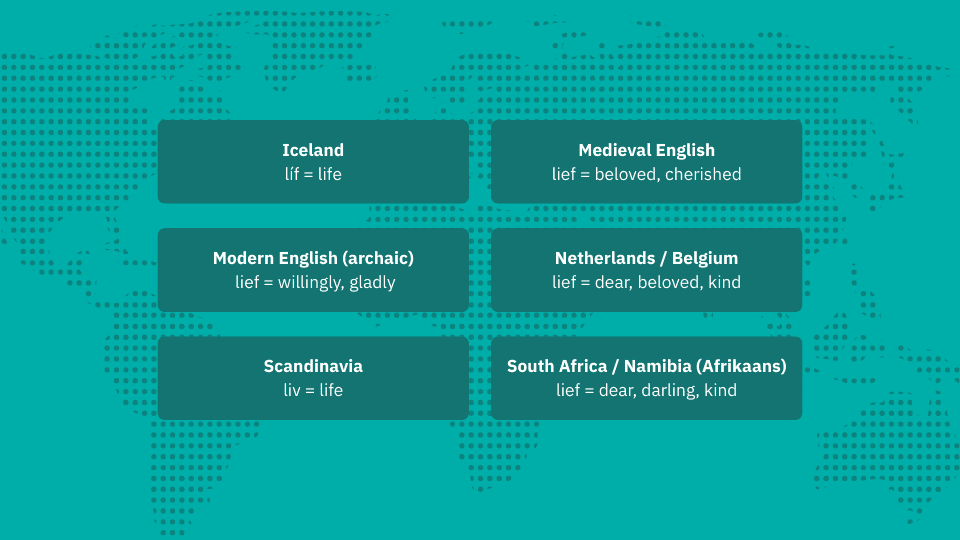
- Medieval English — beloved, dear, cherished
- In Medieval English, 'lief' denoted something precious. Chaucer employed it in The Canterbury Tales, using it to signify 'dear/beloved.' For us, this means every child and young person is beloved, regardless of circumstance — demanding that our products, services, and partnerships safeguard dignity and foster trust.
- Dutch & Afrikaans — dear, kind
- In these languages, 'lief' conveys affection and warmth (Ek is lief vir jou means 'I love you'). For Lief, this translates to kindness being a design requirement — present in interface language, training materials, and every user interaction.
- Later English — willingly, gladly
- As language evolved, 'lief' also signified willingness or gladness. We interpret this as care delivered proactively and with genuine commitment, not merely reactive duty.
- Scandinavia & Iceland — life
- In Scandinavian languages, 'liv' means life; in Icelandic, 'líf' is life. This anchors our focus on real-world outcomes: belonging, safety, and hope — rather than vanity metrics.
Why 'Lief' Fits Our Mission
Our mission is to help children and young people feel wanted, valued, and part of life. The name reinforces four commitments:
- Beloved — Prioritise the person; design with dignity always
- Kind — Default to empathy in product copy, support, and partnerships
- Willing — Be proactive and dependable; act rightly even when difficult
- Life — Measure outcomes that matter in real lives
How the Name Translates Into Our Work
Beloved → Dignity by Design
- Plain-language interfaces reducing cognitive burden for practitioners and families
- Strength-based language ('next steps' rather than 'compliance failures')
- Consent-aware workflows emphasising choice and explaining data requests
Kind → Human Support, Human Pace
- Kind defaults in notifications and reminders — supportive, never shaming
- Informed training for teams using tools with young people
- Fast, empathetic support treating every enquiry as a person, not a case number
Willingly → Proactive Partnership
- Onboarding meeting people where they are — role-based sessions, live training, recorded guides at no extra cost
- Regular check-ins identifying friction early and highlighting additional needs
- 'No wrong door' policy routing all enquiries until resolution
Life → Outcomes That Matter
- Impact-first analytics measuring engagement, follow-through, and staff time saved — not just logins
- Accessibility and inclusion by default through readable typography, keyboard navigation, and multi-channel support
- Data responsibility via privacy-first architecture, encryption in transit and at rest, and role-based access
Operating Principles
- Co-create with young people and practitioners; test copy, flows, and features with users
- Choose clarity over cleverness; prioritise words people understand under stress
- Design for the edges — solutions must work for the most time-pressed practitioner and least connected family
- Make kindness measurable through response times, resolution quality, and churn analysis
A Promise We Make Every Day
Every child is lief — dear, beloved, cherished. Every young person deserves not only care, but the felt sense of being wanted, valued, and part of life. That is the promise we carry into every decision, every feature, and every conversation.